
Today I’d like to tell you about the two activities that mean the most to me — the two paths that eventually led to Nilla Nim Photo.
If you’re here reading this, there’s a good chance that at least one of them is close to your heart too.
So let me share my story with you.
Running and photography — when they had nothing to do with each other
There was a very simple reason why I started running as a child:
I imagined I was a horse. 😀
I adored horses. Luckily, I often had the chance to be around them, and my imagination helped me stay connected to their world even when I wasn’t physically near them. When I couldn’t be with real horses, I could still be one in my mind — free, fast, and endlessly persistent.
As a teenager, when I got my hands on our family’s small compact camera, I mostly photographed horses. I spent a long time thinking about how each photo should look, which horse would photograph well, and how to compose each scene.
If people were involved, they often became quite impatient (understandably so) by the time I finally felt ready to press the shutter.
Careful planning was necessary: film was limited, and developing it was becoming increasingly expensive.
This was back in 1990.
How running became my refuge
So when there were no horses and no camera around, I played at being a very good little horse.
Strangely enough, a sense of competition found its way into my motivations quite early. If others were walking along the same route as I was (for example from the bus stop to school), I would gradually pick up my pace until I overtook everyone. In my imagination, that meant I was clearly an excellent racehorse.
Even back then, I struggled with crowds and noise, so instead of taking the bus I increasingly chose to walk to school. I never measured the distance — it never really mattered. Years later, when I wrote this post, I looked it up on the map: it was about 2 kilometres. I grew to like this way of getting around so much that whenever I could, I chose to walk home as well.
At one point I started wondering whether I could actually get to school faster by running than by taking the bus — partly just to prove that this way of commuting made sense. So I waited at the stop for the 7:05 bus, and when it pulled away towards Hűvösvölgy, I set off too, sprinting out of the intersection and running all the way along Köztársaság Street, then crossing Máriaremetei Road and continuing along Szabadság Street towards my destination. Along the way I would glance at the HSC track — though apart from running the Cooper test there, nothing else really connected me to that place.
I don’t think this alone is why my classmates and teachers saw me as a bit of an odd one. I wasn’t a troublemaker, and I was a good student, as well-behaved children are expected to be. Still, I often felt like I didn’t quite belong on this planet, as if I was always slightly out of place. During these runs, at least, I could be alone with my thoughts and free to drift into my own inner world.
It was around this time that I started thinking of myself as “that running-obsessed kid” — especially once people in the neighbourhood began asking my parents why their child was always running every morning.
Neither running nor photos
This continued until the final year of primary school. That year we got a new form teacher — she taught both PE and biology. Somehow I felt an immediate connection with her. She, too, often seemed like someone who stood slightly apart from the rest, and perhaps that made it easier for me to trust her.
She began selecting runners for the school team for an interschool competition. There were faster kids in my class, but she saw something else in me — persistence, determination — and took me along as well.
The race itself was a huge disappointment.
I finished somewhere in the middle of the pack over the 1.5 km distance, because of course I started far too fast — everyone did, so I did too. Everything happened so quickly that I didn’t enjoy any of it. It felt rushed, overwhelming, and nothing like the quiet joy of running I had known before.
Around the same time, one of my classmates persuaded me to join her at athletics training sessions at the Vasas track in Pasarét. We went together for a few months, but it really wasn’t my world in that form. Someone tried to comfort me by saying I wasn’t built for sprinting anyway — I was more of a long-distance type.
And when I stopped going to training, and secondary school began, running faded completely into the background.
I did, however, find my way back to horses.Photography also returned to my afternoons and weekends. Because of the cost of film, I had never shot carelessly — but I became even more deliberate once my parents trusted me with their Zenit camera. I discovered the magic of depth of field, and from that point on, nothing was safe from my lens: our dog, our cat, family members, plants — and of course the many residents of the stable.
I wanted to photograph everything and everyone. And anyone who was patient enough… usually ended up in front of my camera.
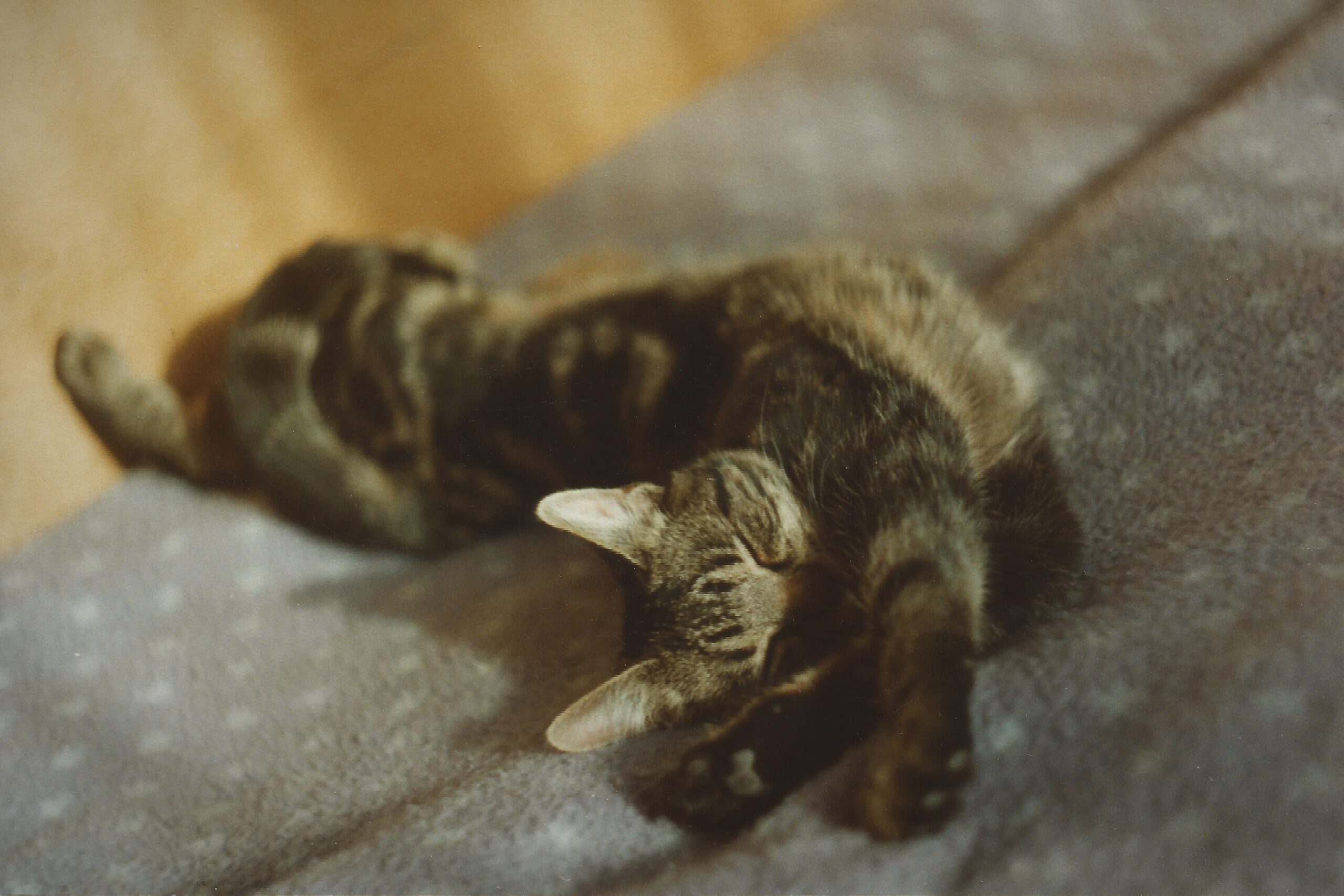
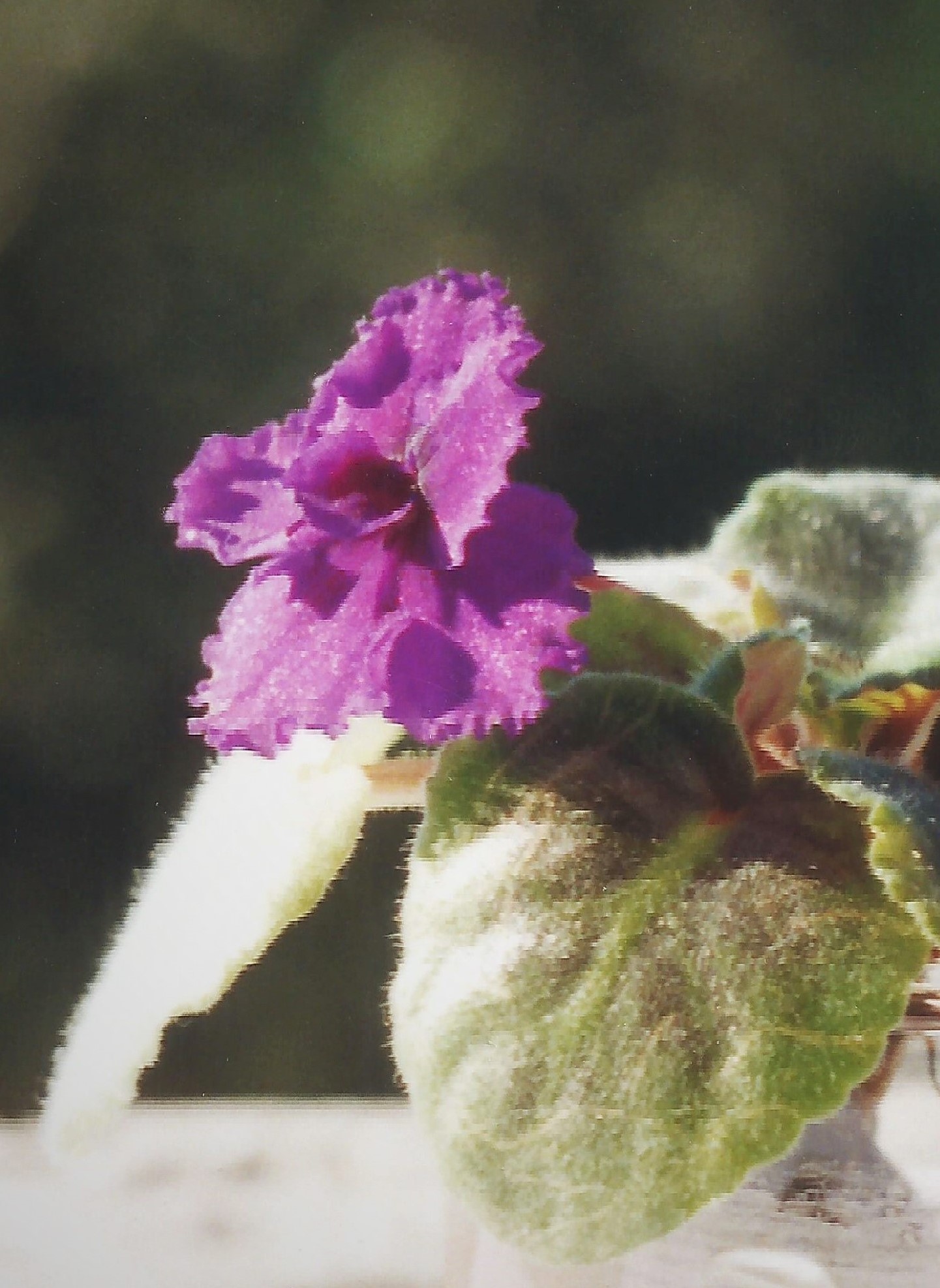
Memories from my old photo albums
Preparing for the final exams gradually pushed horses and photography aside once again — and for quite a few years, they stayed there.
A brief affair with running
When I started working as a young adult, I felt I needed to return to something that was truly mine.
I chose running.
I needed something to carry me through the time between one workday and the next. I needed a goal. And I needed a companion. Luckily, my friend Kata was going through a similar phase in life, so twice a week we ran laps together at Nagyrét in Hűvösvölgy, and on weekends everyone trained independently, wherever they felt like running.
I often chose the glider airfield in Hidegkút as my destination: from Budaliget there, around the field, and then back home. I also ran frequently towards Kerekhegy, though for variety I usually took my bike that way. And to make our commitment official, we decided to enter the Vivicittá together — which was 12 km at that time.
That road race remains especially memorable to me, because we laughed hard twice that day. Once during the race, and once after.
During the race, just before one of the turnarounds, I kept warning Kata that we needed to pace ourselves very, very wisely, because after the turn there would be a climb up to the embankment. Accordingly, we ran with our heads down, very, very sensibly conserving energy. I managed to scare us so thoroughly with this imagined hill that when we reached the turnaround and looked back, we realised we had already run up the embankment. That was it. The dreaded climb was behind us — and the rest of the course was completely flat.
The sudden relief made us burst out laughing, then we settled back into running and carried on.
Afterwards, we laughed again — not because we had finished, but because we discovered that both of us had been convinced the other one was stronger. Neither of us wanted to let the other down, neither of us wanted to fall behind, so we had both been pushing ourselves for the sake of the other.
When I thanked her for pulling me along, she stared at me in disbelief and said she had thought I was the one pulling her.
If memory serves, not long after this, running disappeared from my life again — for almost ten years. I moved to Érd, ran my own household, work gradually took over, and eventually I bought my first horse. That is a very different and very long story, one that ends with me no longer riding horses (or any animals at all). I still care deeply for the horse closest to my heart, who now lives a peaceful, horse-worthy life simply by virtue of being a horse.
Back then, however, I lived a very active social life within the equestrian world. I attended many events, organised group rides and gatherings — and I photographed everything.
I appointed myself the unofficial documentarian of these occasions, which conveniently legitimised my constant camera presence. Once again I was clicking with a compact camera — but hey! This time it was digital! When I got home, I would dive straight into editing: cropping, adjusting contrast, playing with light and colour. I could hardly wait to upload the albums and share them with everyone else.
These photos became treasured memories — but at the time, I didn’t go any further with photography than that.
A lasting influence
Although my horse-riding chapter eventually came to an end, something precious remained from that time: a friendship that has now lasted for more than fifteen years, with Edina — a talented and experienced photographer.
I had always admired her passion for photography. For her too, horses were (and still are) the world she loves to capture the most — only today she does so on a truly professional level. We shared countless adventures together, sometimes lasting several days, travelling across the country. I was the driver, she was the photographer — a perfect win-win situation. Thanks to her, I got to visit beautiful places and rare events I would probably never have discovered on my own.
Along the way, I absorbed a great deal simply by watching her work and what equipment she used. From time to time she would even hand me her camera so I could try it myself, or take photos of her. And yet, for a long time I felt that this was really her world. By the time we met, she was already deeply at home in photography and constantly working to improve. I respected her enormously for that — so much so that I couldn’t imagine ever reaching her level of knowledge and experience.
This time, it was love
Meanwhile, my personal life took me on a bit of a roller coaster. After stepping off it, I moved for a while to Újbarok — a tiny village of about four hundred people, tucked beside the Vértes hills, and officially the smallest settlement in Central Transdanubia. I needed space to breathe, to clear my head, and — it wouldn’t have hurt to get back into better shape either.
I decided to start by walking around the village. I used to do it on horseback earlier, after all — how hard could three kilometres be?
Once the walks began to feel too boring, I thought: why not try jogging?
Soon I started timing myself, at first with nothing more than my phone. Heavens! How intoxicating it felt when I first managed to run the full loop of the village in under 21 minutes! 😀
Just like before, I wasn’t alone for long. I started running with Adri, who was enthusiastic enough to pull me back into racing. Later I moved again, this time to Biatorbágy, where I joined the local running community from Herceghalom and began running slightly longer distances. (At first I was genuinely shocked that people ran 10 kilometres for training!)
Local trail races, city half marathons, the Dörgicse Panorama Run, the BSI Brutal Run, big city events…
But Adri didn’t stop there. She convinced me to cycle around Lake Balaton in a relay team during the UB — which we completed in 19 hours. At least I truly got into shape. 😀


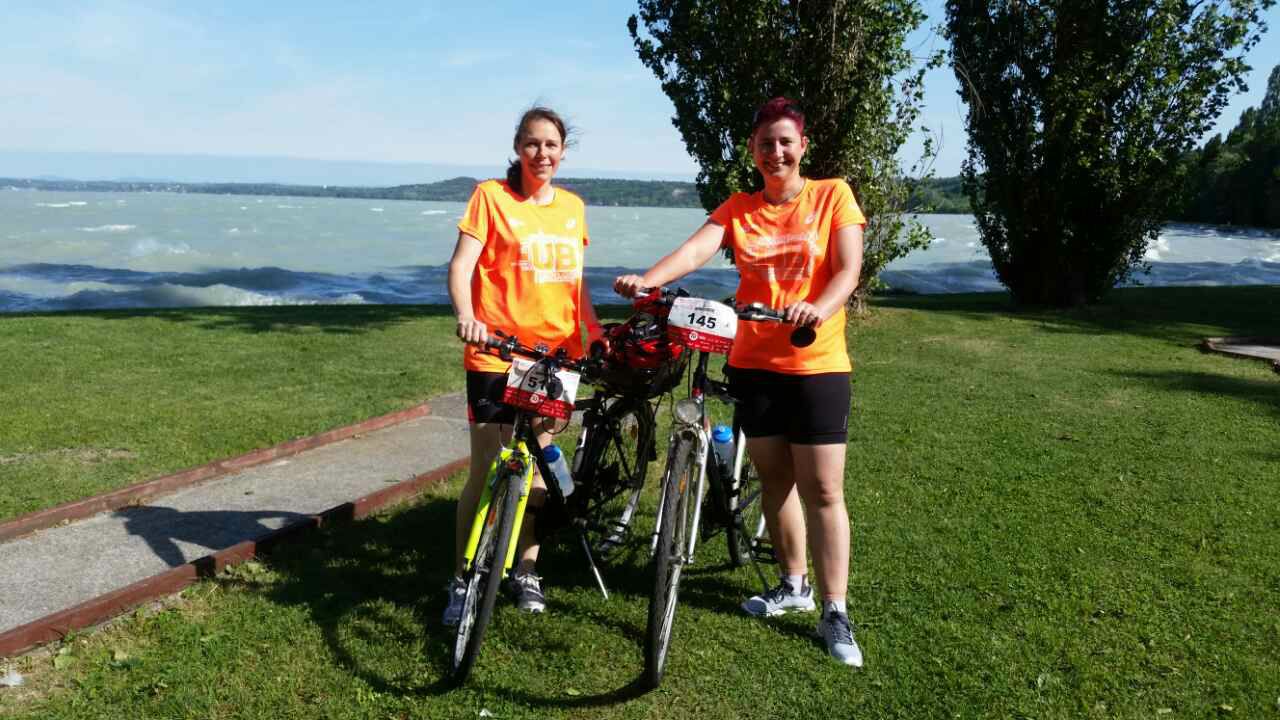
Photos by: Szabi Beda (Brutal Running) and an unknown UltraBalaton runner (UltraBalaton start)
Around this time I met Szabi, and through him I found my way into the Futapest trail running series. Next year, in my first full season I ran the shorter distances (around 5K), and that year we both ended up first in our age categories in the overall ranking. Gradually I kept improving my half-marathon time (eventually breaking the two-hour mark), and I completed my first marathon.
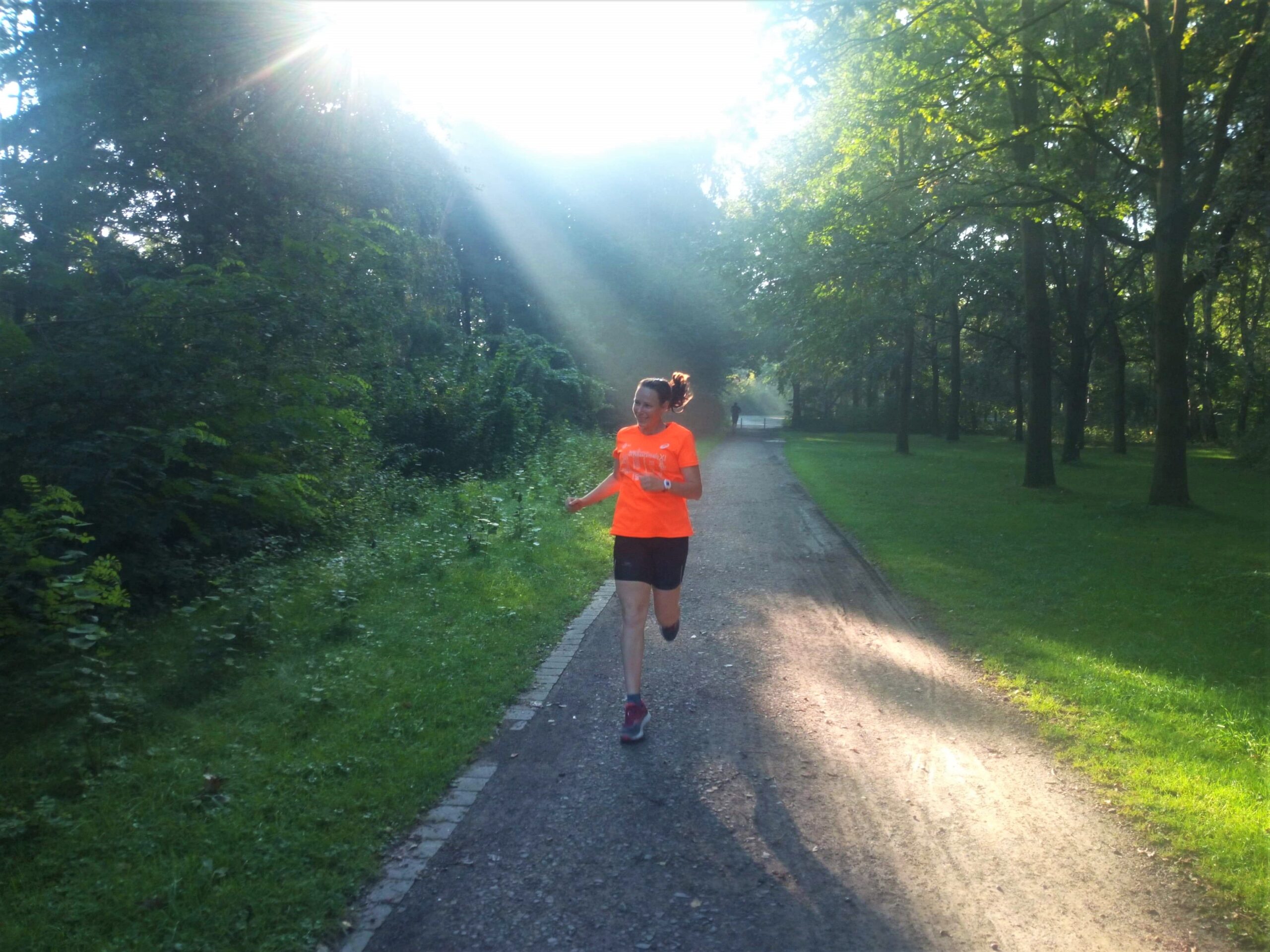
Running carefree back then (somewhere in Germany, photo by Szabi Beda)
The following year I moved up to the longer distances like Szabi did before — and that’s when the strange things began, the worrying symptoms that didn’t quite make sense.
Despite running more and more, and getting faster, my weight began to increase, regardless of all the calorie calculations. The diagnosis was hypothyroidism, confirmed by two different doctors. Before the season was even over, my endocrinologist firmly advised me to stop competing. And by that point, I myself could already feel that it was time to finally dismount the imaginary racehorse.
I was never an outstandingly fast runner, but I loved the process of striving, of bringing out everything I could from myself. I loved that each season felt like a small step forward. And I grieved deeply when it became clear that this chapter was coming to an end.
Not being on the course was never an option
For a while after the diagnosis, I felt broken.
There were no goals, no structured training, no clear direction. The diagnosis itself was frightening, and above all, I wanted to heal. I knew I had to be much gentler with myself. I couldn’t risk my health. The months leading up to that point had already been full of stress (at work and in other areas of life) — and, as it later became clear, the competitive training had added even more physical strain on top of that. No wonder my hormones had gone completely out of balance.
Thankfully, I was able to reach a kind of compromise with my doctor. Movement still mattered — she believed that too — but it had to be different now. I could run if I wanted to, but only as long as it felt genuinely good. No pushing, no forcing, no chasing performance. Just movement that stayed kind to my body.
There is such a thing as positive stress, she explained — and if running was truly a source of joy rather than pressure, then I shouldn’t give it up entirely. Deal.
Still, I couldn’t let go of the atmosphere of races. I continued to accompany Szabi everywhere, but it hurt deeply to stand on the sidelines while others were out there running. I had to find a way to be on the course again.
The Futapest series takes runners to truly beautiful places, and I didn’t want to lose the chance to wander through forests and fields myself. So I asked Tamás, the race director, whether I could complete the courses unofficially — slowly, without pushing the pace, walking whenever needed. That’s when he offered me another option instead: I could become part of the organising team.
That way, I could be out on the course, covering certain sections while the runners passed through.
And — if I was already there — maybe I could take photos too.
Expectation vs reality
Well, that’s how it began.
That’s how it began again.
I went out to my assigned point with nothing but my phone in hand, waited for the runners to arrive, and then — oh no… this wasn’t going to work.
Not enough memory.
Not enough resolution.
Not fast enough.
And these runners…! They never passed exactly where I had imagined they would. Yet composition mattered to me. Framing mattered. The whole image mattered.
(A belated apology to every photographer I must have driven crazy back in my running days.)
Sometimes I wished I could zoom in.
This felt careless. Inadequate. The runners deserved better than this. I knew I could do better. I wanted to do better.
Tamás did offer to lend me a camera. But by then, I was already lost.
I wanted my own. 🙂
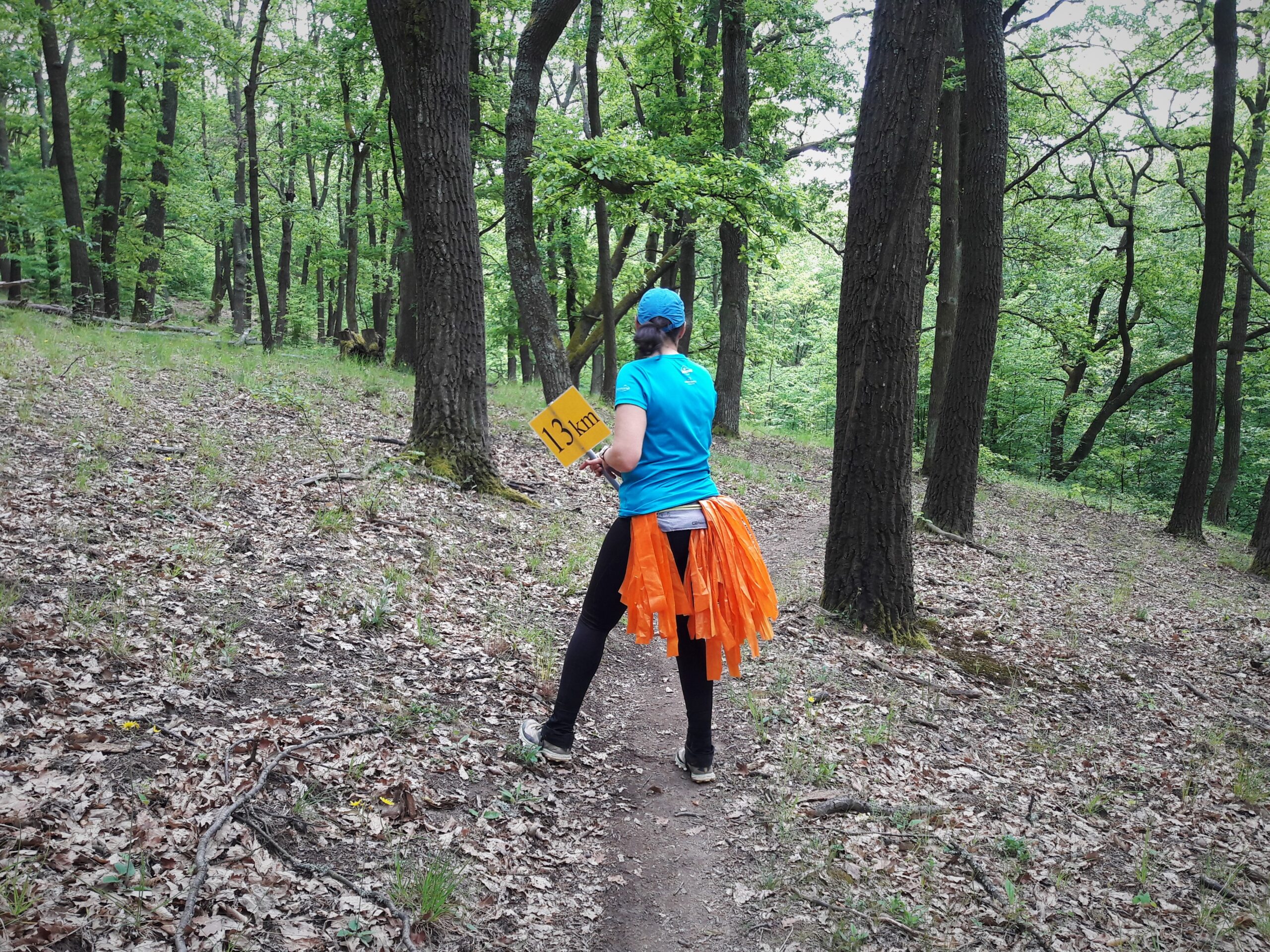

At Futapest races, now as a course marshal
Learning the hard way
Naturally, I turned to Edina for advice. I asked her the dreaded question every photographer hears at least once in their life — usually many times:
What camera should I buy? 😀
We talked through everything: what I wanted to use it for, how serious I was, how much I already knew, how much I could afford. Based on all that, my first step was a higher-end bridge camera. It offered almost everything a DSLR would — and thanks to live view, it actually prepared me well for working with a mirrorless camera later on.
Of course, it had its limitations.
But we both knew this was only a starting point.
And when I finally unpacked my new camera, it turned out I knew almost nothing about cameras. 😀
That was the moment I realised: I’d better get serious. There was no way around it — I had to learn. And I had to learn quickly, because the Futapest races came around regularly throughout the year.
I built my foundations through a course that combined theory and practice, and then discovered post-processing too. And for real-life practice, I started with the running team Szabi was part of. The poor Cheetahs never knew where I might appear next… I popped out from behind bushes during training sessions and found myself lying in the leaves along their routes during community runs — whether they were looping around Infopark or climbing the trails of Hármashatár Hill.

At one of the Cheetahs community runs (photo by a cyclist mum passing by)
Over time, things began to fall into place.
I studied the Sony manual, discovered more and more features, and kept experimenting. Edina never held back when it came to helping me — I could ask her anything, anytime. If needed, we would grap the camera and go for a walk together, or sit down over an online call and move sliders in the editing software.
There was always one thing that mattered most to me:
I wanted to create the kind of running photos I would personally love to see of myself, too.
Always wanting better
I won’t pretend it was easy.
With so little experience, photographing entire race fields was deep water. At first, the only expectation was that everyone should have a photo. But for me, it mattered greatly whether those photos were flattering or not.
I started paying close attention to movement — to the moments that look best on runners, whether women or men. I also longed for the surroundings to be beautiful. If there was anything distinctive along the course, no matter how small, I tried to include it in the composition.
I began to look for colours and shapes, for the best angles and directions. I like being able to prepare properly for each event, so I often study the route days before the race.
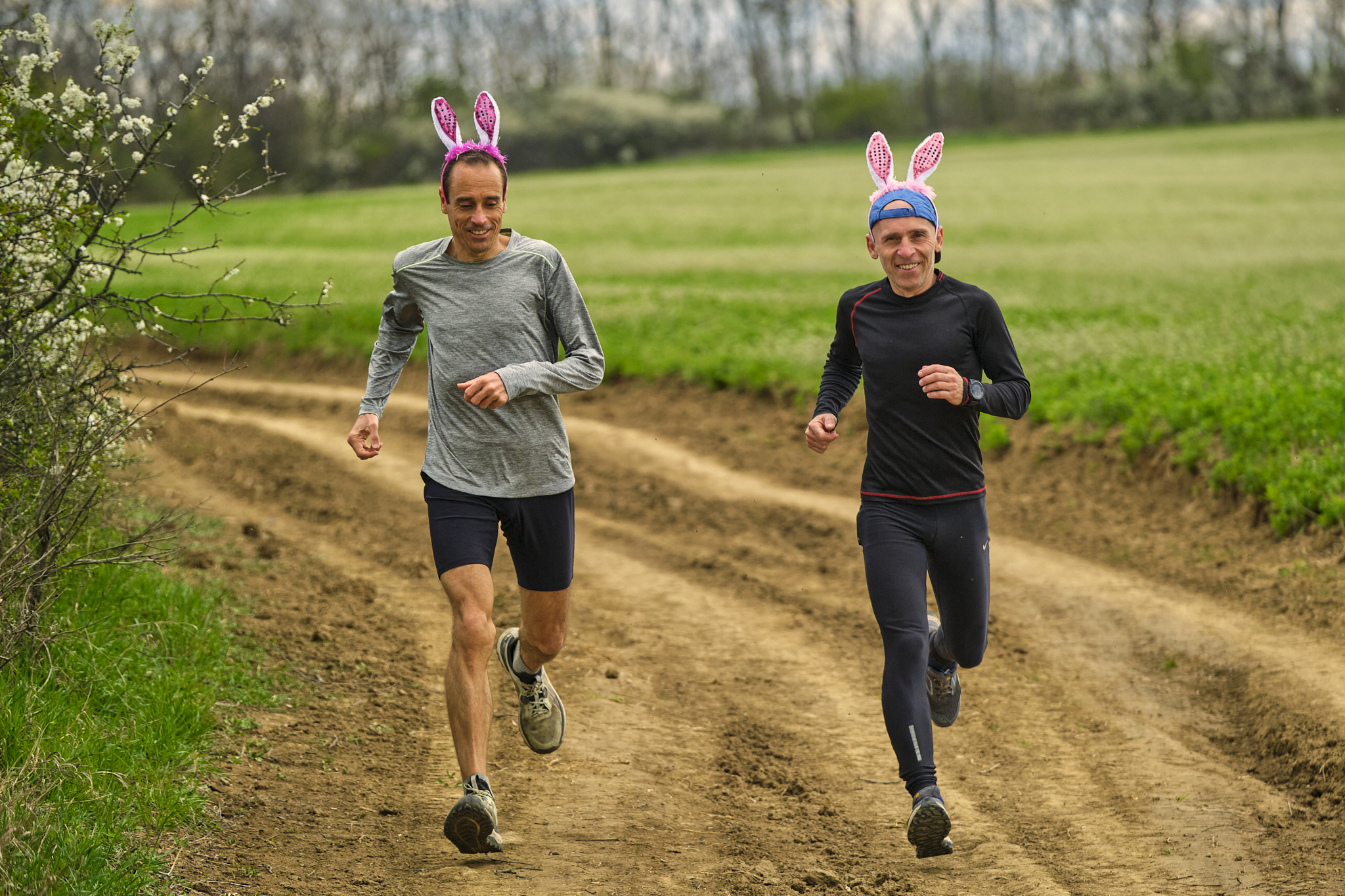
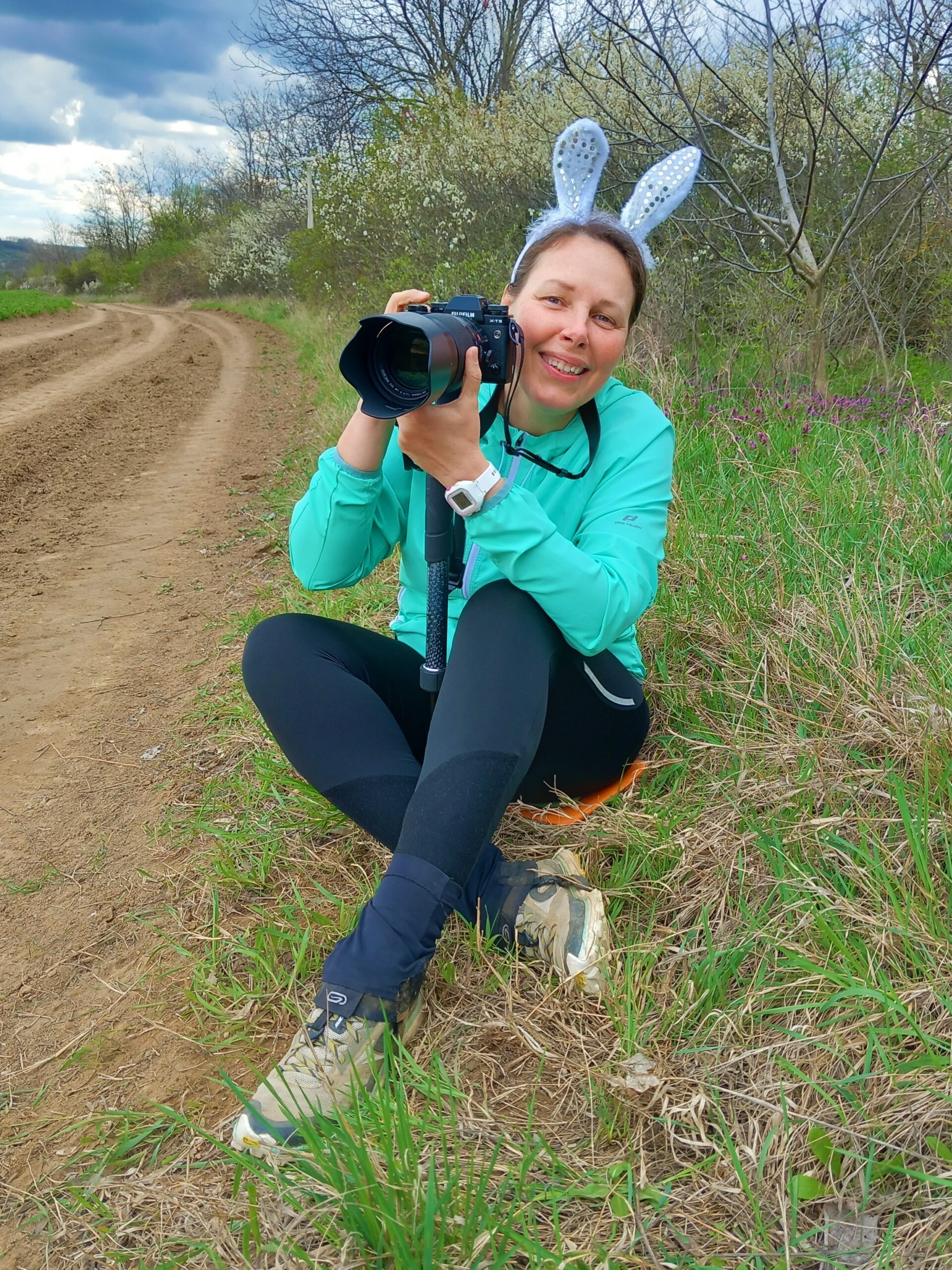
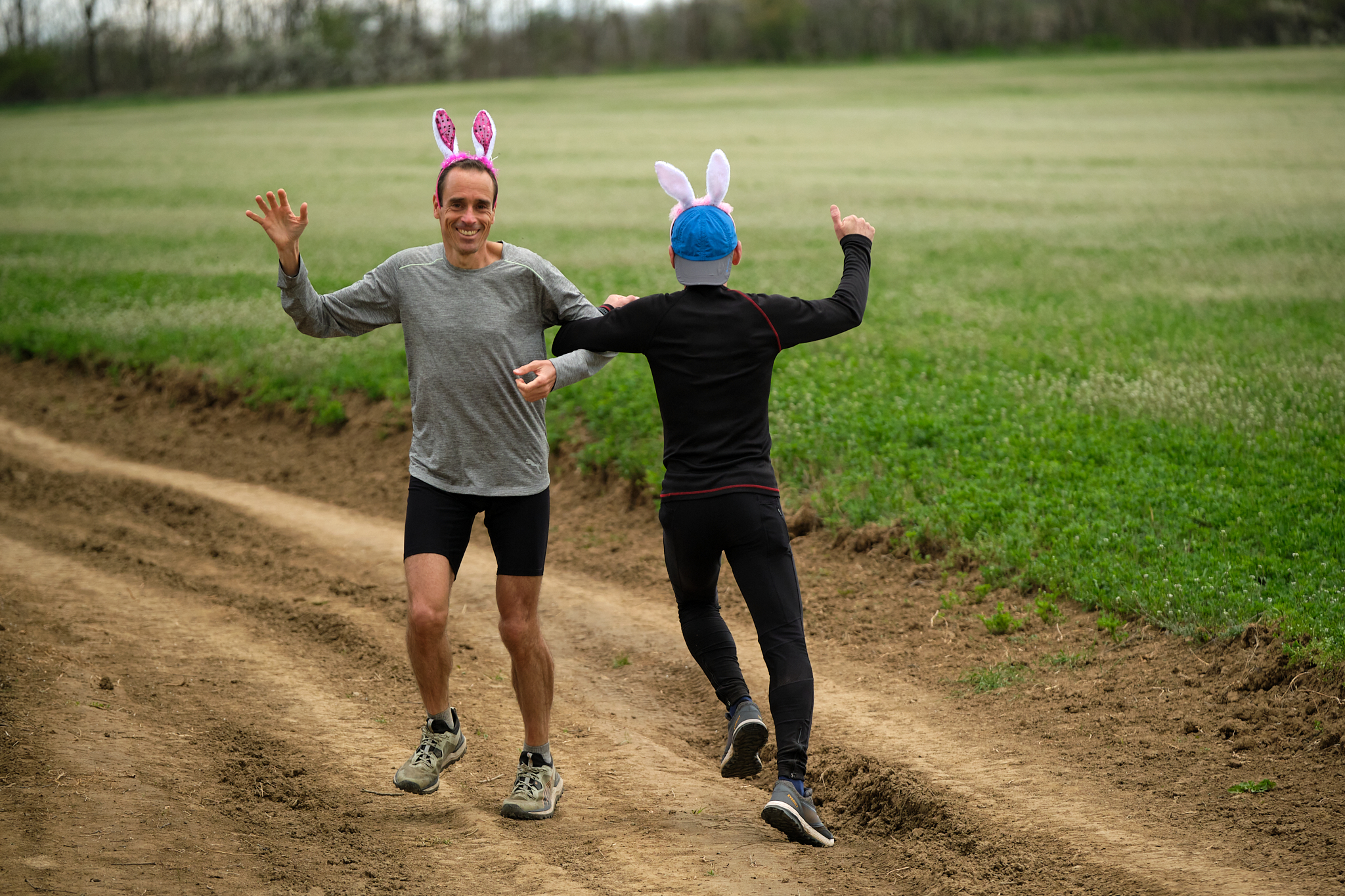
If the client* asks for dancing rabbits, the client gets dancing rabbits.
(True story. Futapest, Iklad)
Tamás (*the client mentioned above), without even intending to, became one of my greatest teachers. From the very beginning, he shared his honest opinions about my photos and my equipment — the good and the not-so-good alike. Sometimes his feedback discouraged me deeply. But over time, I learned to move through that discouragement more quickly. Once the self-criticism and the excuses (“why this turned out the way it did”) faded, I could begin to understand where his observations were fair and valuable.
I’ve come to appreciate his direct communication — his expectations and his ideas alike. After all, we both wanted the same thing: better and better images. And so I tried to take each piece of feedback with me into the next event, to refine my approach, to build new knowledge into my workflow… while still keeping a balance between expectations and my own visual voice.
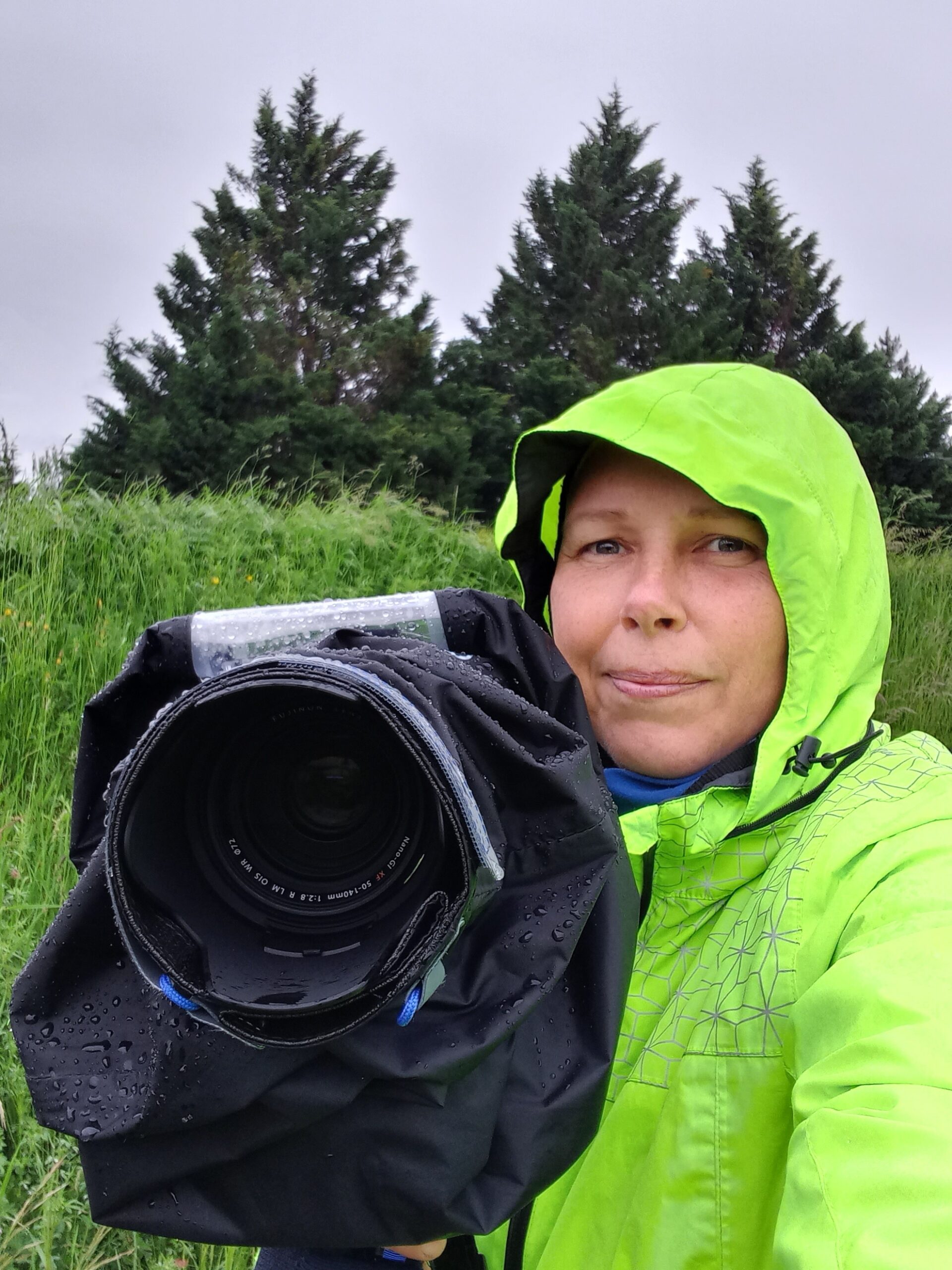
In the meantime, the bridge camera was replaced by a mirrorless. And now, I continue to grow my collection of running photos, shooting with a Fujifilm system.
Creative freedom
In race photography, especially when you’re assigned to a fixed point along the course, your freedom is often limited. I always try to make the most of the given conditions, and there is no question that each event is a valuable exercise in observation and timing. It keeps my eye sharp.
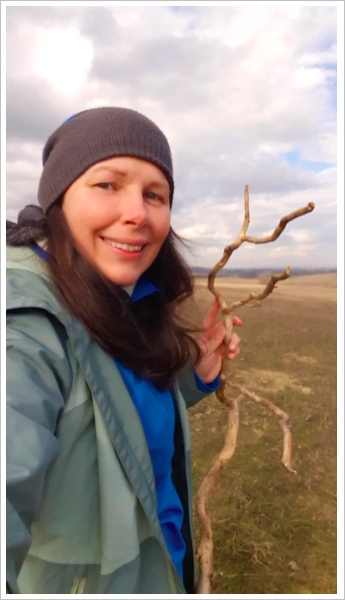
Fine-tuning the scene before the Futapest race in Mogyoród
But I enjoy it even more when I can move freely along the route. And I enjoy it most of all when we are not constrained by cut-off times, rankings or pressure.
By we, I mean both the photographer and the runner.
There is something deeply special in what can happen when we have time: when we can shape the concept together, think through the best movements, work with beautiful light, choose meaningful locations — especially when there is a unique or unexpected idea, whether it comes from the runner or from me. I love dedicating real time to one runner, or to an entire team. I love giving space to creativity and making each session more personal.


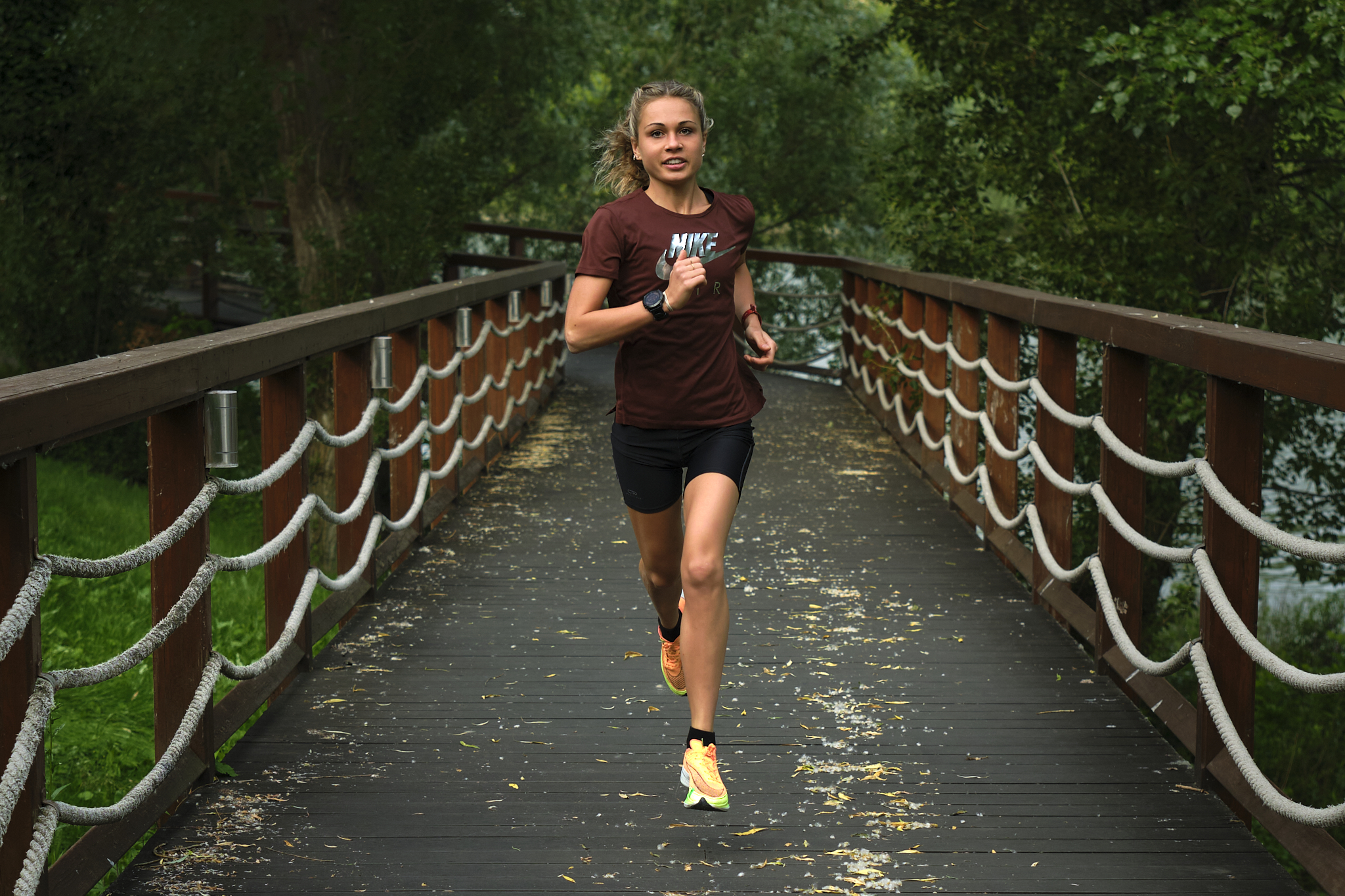
This is the path that gradually led to the idea of Nilla Nim Photo.
I cannot and do not want to separate myself from running. It has been part of my life for far too long, and I love it too deeply. And to my own surprise, I still find genuine joy in capturing these moments.
What makes me happiest is that I can now bring these two passions together.
My wish is to help many runners create images they can look back on as something truly meaningful and lasting.
The icing on the cake is that I get to run, too.
My doctor’s advice gently led me back to the way I loved running as a child: moving from A to B, or simply running in circles, freely, in my own rhythm, immersed in my own inner world.
However I look at it — running, or through the viewfinder —
my world feels whole in motion.
If this story resonated with you, you’re very welcome to stay around.
You can follow my work here on the blog, or on social media — or join my mailing list if you’d like to hear about future photoshoots and new posts.


Join my Mailing list
Stay connected to the world of running photos
If you’d like to stay in the loop about upcoming photoshoots near you – or read useful, real-world tips about creating good running photos – feel free to join my mailing list.
No spam, no daily messages – just the good stuff, every now and then.